Purpose and terminology
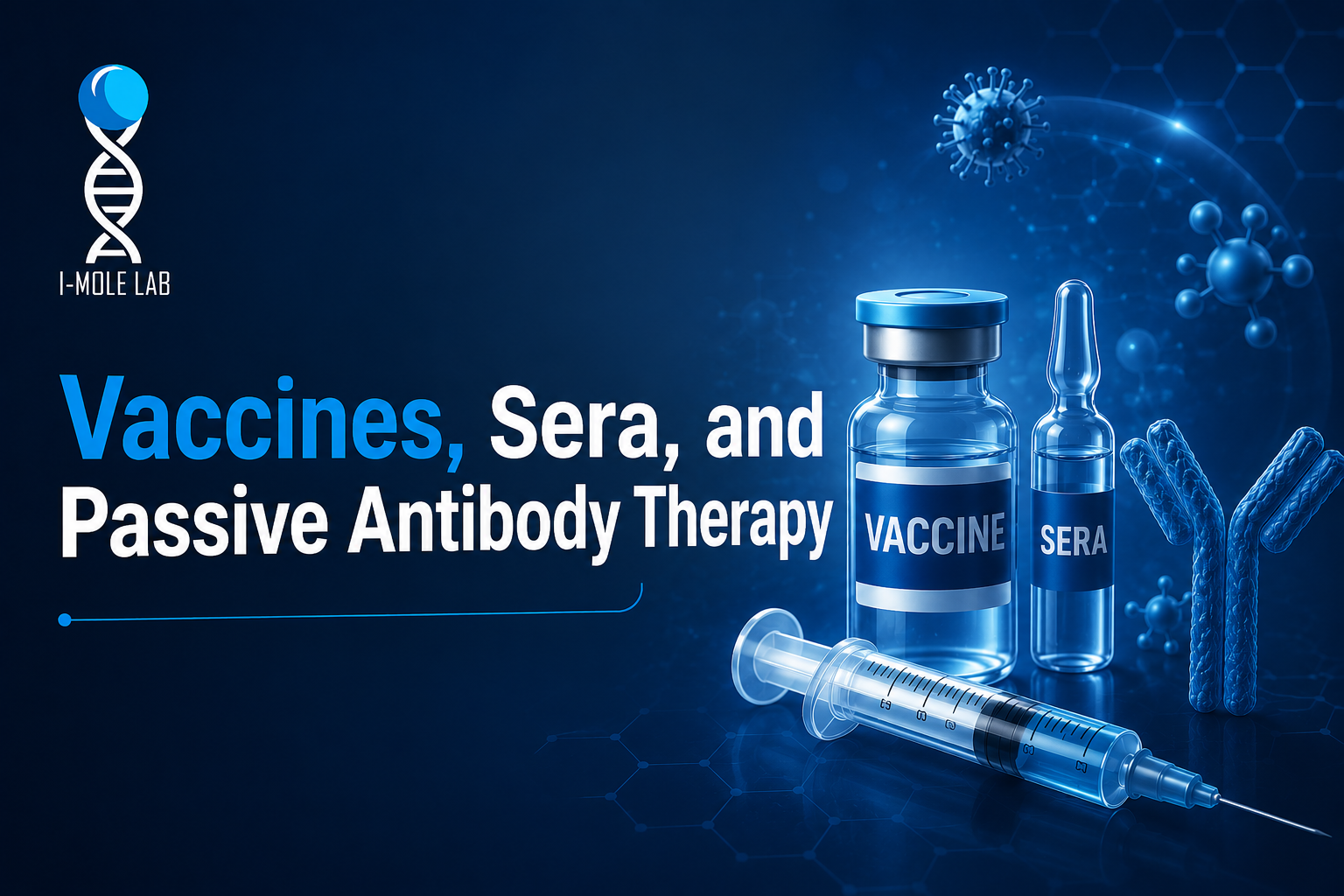
The terms vaccine and serum are sometimes used interchangeably in public discussions, but scientifically they describe different immunological strategies. A vaccine stimulates the recipient’s immune system to generate active immunity and immune memory. Serum therapy or passive antibody therapy provides ready-made antibodies that can act immediately but usually do not create long-term immune memory.
In modern biomedical language, the older term “serum therapy” is often replaced by more precise terms such as passive immunization, convalescent plasma, polyclonal immunoglobulin preparations, or monoclonal antibody therapy, depending on the source and composition of the antibody product.
Innate and adaptive immunity
Innate immunity is the rapid, non-specific defense system present from birth. It includes physical barriers such as skin and mucosa, chemical barriers such as antimicrobial secretions, and cellular responses involving phagocytes, dendritic cells, natural killer cells, and inflammatory mediators.
Adaptive immunity is antigen-specific. It involves B lymphocytes, T lymphocytes, antibodies, and immunological memory. Antigen-presenting cells process pathogen-derived material and present peptide antigens on major histocompatibility complex molecules. T cells coordinate cellular immunity and help B cells. Activated B cells can differentiate into plasma cells that secrete antibodies and into memory B cells that support faster responses after re-exposure.
How vaccines work
A vaccine presents the immune system with a safe form of a pathogen, a pathogen component, or genetic instructions encoding an antigen. The goal is to generate protective immunity without causing the disease. Vaccine-induced protection may involve neutralizing antibodies, T-cell responses, mucosal immunity, or combinations of these mechanisms. The quality of protection depends on antigen design, dose, adjuvant, route of administration, population, age, immune status, and pathogen biology.
Major vaccine platforms
Whole-pathogen vaccines use either inactivated organisms that cannot replicate or live-attenuated organisms that are weakened. Protein subunit vaccines present purified antigens and often require adjuvants. Virus-like particle vaccines mimic viral structure but lack the viral genome. Viral-vector vaccines use an engineered virus to deliver antigen genes. mRNA vaccines deliver an RNA message, usually protected in lipid nanoparticles, that instructs host cells to produce the antigen temporarily. DNA vaccines deliver DNA templates that must enter cells and be transcribed into mRNA before antigen production.
Passive antibody therapy
Passive antibody therapy provides antibodies directly rather than asking the body to make them. It can be useful when immediate protection is needed, after exposure to certain pathogens or toxins, or in immunocompromised individuals who may not respond well to vaccination. However, passive antibodies are gradually cleared from the body and generally do not provide durable immune memory.
Examples of passive immunization include rabies immunoglobulin after high-risk exposure, antivenoms against venom toxins, convalescent plasma in selected contexts, and monoclonal antibodies designed to bind specific viral proteins, bacterial toxins, inflammatory mediators, or cancer-associated targets.
Safety and evidence standards
Scientific evaluation of vaccines and antibody products requires phased clinical trials, defined endpoints, adverse-event monitoring, manufacturing quality control, post-marketing surveillance, and transparent risk-benefit assessment. No platform is universally best; the correct platform depends on the pathogen, target population, immune correlate of protection, manufacturing constraints, and public-health goal.
Key scientific takeaway
A vaccine trains the immune system to produce its own response and memory. Passive antibody therapy supplies ready-made antibodies for immediate but usually temporary protection or treatment.
Vaccine and antibody strategies
| Strategy | What is delivered? | Main advantage | Main limitation |
| Inactivated vaccine | Killed pathogen | Broad antigen presentation and no replication | May need adjuvants or boosters |
| Live-attenuated vaccine | Weakened replicating pathogen | Strong immune stimulation | Not suitable for some immunocompromised people |
| Protein subunit/VLP | Purified antigen or virus-like particle | Defined antigen and good safety profile | Often needs adjuvant and repeat doses |
| Viral vector | Vector carrying antigen gene | Efficient cellular delivery | Vector immunity and design constraints |
| mRNA vaccine | mRNA encoding antigen in delivery particles | Rapid design and no live pathogen | Storage, delivery, and reactogenicity considerations |
| Passive antibodies | Ready-made antibodies | Immediate effect | Temporary and does not train immune memory |
References
- Plotkin, S. A. (2010). Correlates of protection induced by vaccination. Clinical and Vaccine Immunology, 17(7), 1055-1065.
- Pulendran, B., & Ahmed, R. (2011). Immunological mechanisms of vaccination. Nature Immunology, 12, 509-517.
- Centers for Disease Control and Prevention. Understanding how vaccines work and vaccine types. https://www.cdc.gov/vaccines/
- World Health Organization. Vaccines and immunization resources. https://www.who.int/health-topics/vaccines-and-immunization
- Graham, B. S. (2020). Rapid COVID-19 vaccine development. Science, 368(6494), 945-946.