Scientific perspective
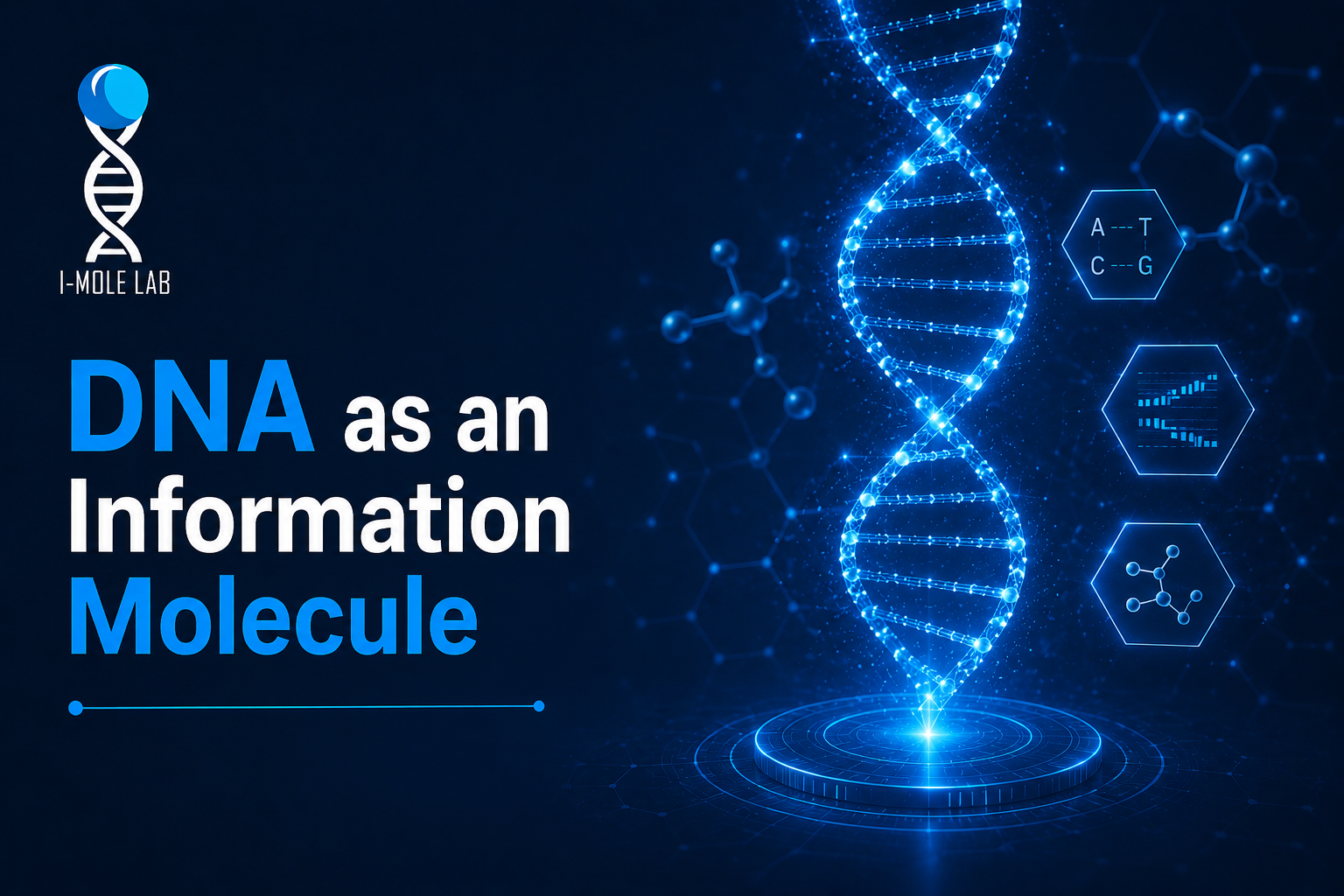
DNA is widely known as the genetic material of living organisms, but it is also a chemical information polymer. Its sequence is digital-like because it is composed of four distinguishable symbols: adenine, thymine, cytosine, and guanine. This does not mean DNA is identical to electronic memory, but it does mean that information can be encoded, synthesized, stored, amplified, copied, and read from DNA molecules.
How digital data can be encoded in DNA
Digital information is first represented as binary code. Encoding algorithms then convert binary data into sequences of A, T, C, and G while avoiding problematic sequence patterns such as long homopolymers, extreme GC content, and secondary structures. The designed DNA sequences are chemically synthesized, stored as physical molecules, and later retrieved by sequencing. Decoding algorithms reconstruct the original data and correct errors introduced during synthesis, storage, amplification, or sequencing.
Why DNA is attractive for archival storage
DNA has high information density and long-term stability when stored under dry, dark, and cool conditions. Unlike magnetic or electronic storage media that may become obsolete or degrade quickly, DNA can remain readable for long periods if preservation conditions are appropriate and sequencing technologies remain available. DNA also has the advantage that the same molecule can be copied by PCR and read by multiple sequencing platforms.
Experimental milestones
Early demonstrations showed that short messages could be encoded into synthetic DNA and recovered after sequencing. Later work stored larger digital files and introduced error-correcting codes, address sequences, and random-access retrieval. These studies established that DNA storage is scientifically feasible, but feasibility does not yet mean routine commercial replacement of electronic data centers.
DNA computing
DNA computing uses molecular interactions to perform computational operations. DNA strands can hybridize, displace one another, be cleaved by enzymes, amplified, or assembled into logic circuits. The major advantage is molecular parallelism: enormous numbers of molecules can interact simultaneously. However, molecular computing is slower, harder to program at scale, and more chemically constrained than electronic computing for general-purpose tasks.
Applications and realistic limits
Potential applications include long-term cold data storage, molecular diagnostics, biosensors, smart therapeutics, biological recording systems, and programmable molecular circuits. The main barriers include synthesis cost, sequencing cost, write and read speed, error correction, random access, physical handling, standardization, and integration with existing digital infrastructure.
Scientific caution
DNA data storage should not be presented as a direct replacement for all computer memory. It is more realistic for archival storage, where high density and long lifetime matter more than rapid reading and writing. DNA computing is best understood as a specialized molecular information-processing strategy, particularly relevant in chemical and biological environments.
Key scientific takeaway
DNA is both a biological archive and a programmable chemical information medium. Its future value will depend on reducing synthesis and sequencing costs, improving error correction, and designing practical systems for retrieval and automation.
Comparison of electronic and DNA-based information systems
| Feature | Electronic storage | DNA storage |
| Information alphabet | Binary 0/1 | Four bases: A/T/C/G |
| Best use | Fast reading and writing | Long-term dense archival storage |
| Main strength | Speed and mature infrastructure | Density and potential longevity |
| Main limitation | Energy and hardware obsolescence | Synthesis cost, read/write speed, error correction |
| Retrieval | Direct electronic access | Sequencing-based reading and decoding |
References
- Adleman, L. M. (1994). Molecular computation of solutions to combinatorial problems. Science, 266, 1021-1024.
- Church, G. M., Gao, Y., & Kosuri, S. (2012). Next-generation digital information storage in DNA. Science, 337, 1628.
- Goldman, N., et al. (2013). Towards practical, high-capacity, low-maintenance information storage in synthesized DNA. Nature, 494, 77-80.
- Erlich, Y., & Zielinski, D. (2017). DNA Fountain enables a robust and efficient storage architecture. Science, 355, 950-954.
- Takahashi, C. N., et al. (2018). Demonstration of end-to-end automation of DNA data storage. Scientific Reports, 8, 14820.